
Structural drying, measured rather than assumed
Getting a home truly dry takes more than running a fan for a few days. All Restoration builds a drying plan around your home's specific materials and monitors it through to a verified result.
Email Us for a Free Estimate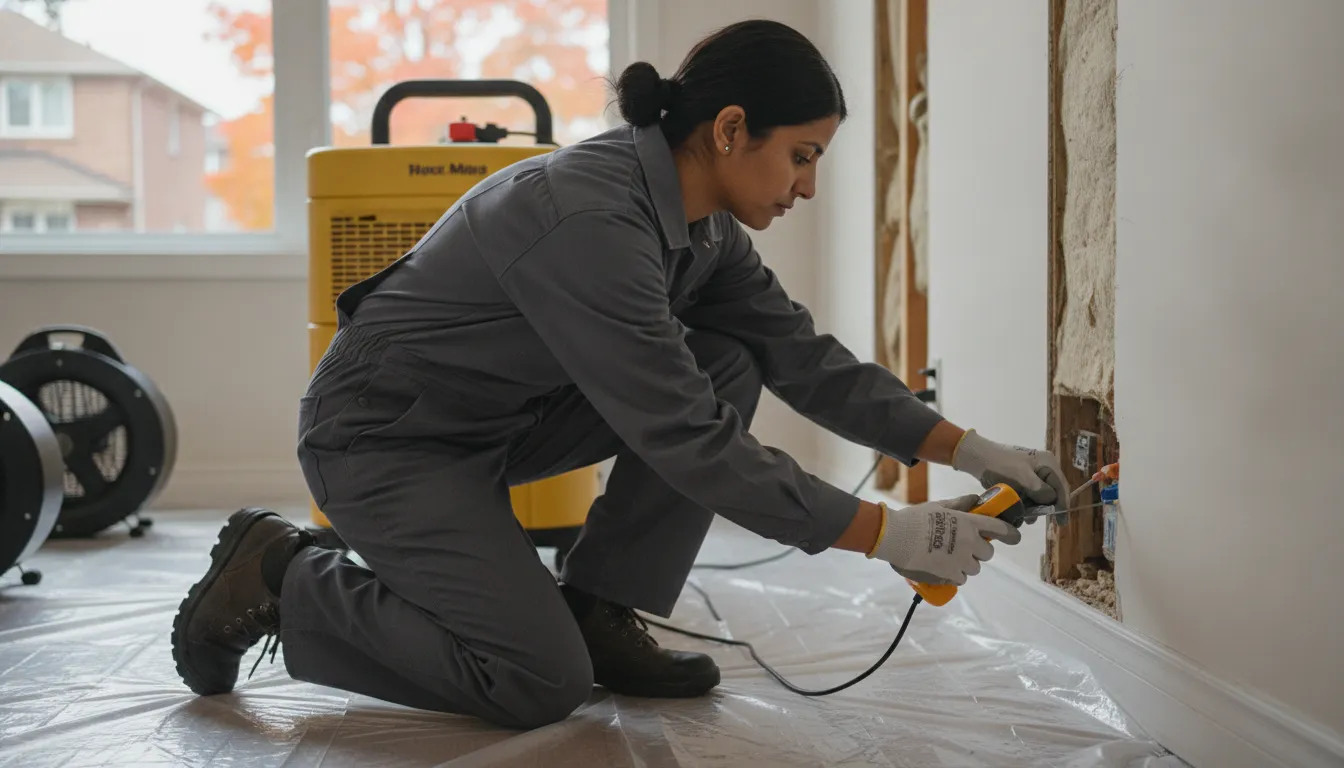
Why structural drying is its own discipline
Removing standing water is only the first step. What remains trapped in framing, subfloor and insulation is often what causes lasting problems, from warped hardwood to hidden mould growth. Markham's varied housing stock, from older homes with original plaster and lath to newer builds with engineered wood products, each dry at different rates and require different equipment placement.
Reading moisture, not guessing at it
We use moisture meters to track drying progress across affected materials rather than relying on how a space looks or feels.
Matching equipment to materials
Air movers, dehumidifiers and specialty drying equipment are placed based on the specific flooring, framing and finishes involved.
Protecting adjacent finishes
Drying setups are arranged to avoid unnecessary stress on trim, millwork and finishes outside the immediate affected zone.
Verifying before finishing
We don't consider a space dry until moisture readings confirm it, protecting against problems that would otherwise surface later.
A space can look dry while still holding damaging moisture
Surface materials often dry faster than what's underneath or behind them. A Markham basement subfloor or wall cavity can retain moisture well after the visible flooring or drywall feels dry to the touch, creating ideal conditions for mould or material breakdown if drying stops too early.
A drying plan verified by data, not appearance
We track moisture levels throughout the drying process with regular readings, adjusting equipment placement as needed, and only consider a space complete once readings confirm materials have returned to a safe range throughout, not just at the surface.
Our structural drying process
An engineered approach that treats drying as a measurable outcome.
- 1
Initial moisture mapping
We measure moisture levels across affected materials to understand the true scope of saturation.
- 2
Equipment placement
Air movers and dehumidifiers are positioned based on the specific materials and layout involved.
- 3
Daily monitoring
We track drying progress with regular moisture readings and adjust the setup as needed.
- 4
Adjustment as needed
Equipment and airflow are reconfigured if certain areas are drying more slowly than others.
- 5
Final verification
We confirm materials have reached a safe moisture range before considering drying complete.
Why our drying process holds up over time
The difference between a lasting result and a recurring problem often comes down to how drying is measured.
Data-driven verification
We rely on moisture readings, not appearance, to determine when a space is truly dry.
Materials-specific approach
Our equipment placement reflects the actual flooring, framing and finishes in your home.
Licensed & insured
Structural drying work is backed by proper licensing and insurance throughout.
Consistent monitoring
We track progress regularly rather than setting up equipment and returning only at the end.
Protective of finishes
We arrange drying setups to avoid unnecessary stress on trim and surrounding finishes.
Regional housing knowledge
We understand how Markham's varied building stock affects drying timelines and methods.
Structural drying questions
How long does structural drying typically take?
Timelines vary based on the materials involved and extent of saturation, which is why we monitor progress with moisture readings rather than working to a fixed schedule.
How do you know when a space is fully dry?
We use moisture meters to verify readings across affected materials, only considering the space complete once those readings confirm a safe range throughout.
Can drying equipment damage my home?
We position air movers and dehumidifiers carefully to avoid unnecessary stress on trim, millwork and finishes outside the immediate work area.
Does older Markham housing dry differently than new builds?
Yes, materials like original plaster and lath behave differently than newer engineered products, which is why our approach is tailored to each home.
How do I get started?
Email us with details about your situation and we'll help determine the right drying approach.
Let's get your home to a verified dry state
Email us today to begin a structural drying assessment.
Email Us for a Free EstimateWeather drives water-damage risk — email us if you find water.
Fall water-damage conditions in Markham, ON
Fall rain around Markham, ON tests gutters, sump pumps, and foundations; catching leaks and seepage early prevents the slow water damage and mold that surface over winter.
Proudly Serving Markham, ON
Local, on-time service throughout Markham and the surrounding area.