
Storm damage restoration that restores more than what the storm exposed
Ontario storms move through quickly, but the water they leave behind lingers in ways that aren't always obvious. All Restoration restores what a storm disturbs, from roofline leaks to overwhelmed grading, with the same finish quality as the rest of your home.
Email Us for a Free Estimate
How storms affect homes across Markham and the GTA
Severe summer storms and the occasional ice storm both put real pressure on a home's exterior systems. Wind-driven rain finds its way past aging flashing and shingles, while sudden downpours can overwhelm eavestroughs and grading that were adequate for years until one particularly intense system passed through.
Roofline and flashing intrusion
Wind-driven rain during a storm often finds gaps around flashing, vents or aging shingles that hold up fine under normal rainfall.
Overwhelmed eavestroughs and grading
A short, intense storm can produce more runoff than eavestroughs and yard grading can move away from the foundation quickly enough.
Window and door seal failures
Older seals around windows and exterior doors can allow wind-driven rain in during a severe storm, even without any other structural issue.
Secondary moisture in attics and walls
Storm water that enters through the roof can travel along framing before showing up as a ceiling stain well away from the original entry point.

Storm damage often shows up far from where it entered
A leak that starts at a roof vent during a windstorm can travel along framing and insulation before appearing as a stain on a bedroom ceiling several feet away. Repairing only the visible mark, without tracing the water's actual path, leaves hidden moisture behind that can lead to further deterioration.
Restoration that traces the water back to its source
We follow the moisture path from the visible damage back to its origin, checking attic space, framing and insulation along the way. That approach protects against the kind of delayed problems that come from a repair that only addresses the surface.
Our storm damage restoration process
A methodical process for tracing, drying and restoring storm-affected areas.
- 1
Damage assessment
We inspect the affected area and trace the likely path water travelled from its point of entry.
- 2
Water extraction
Any standing or trapped water is removed from affected materials and cavities.
- 3
Structural drying
Framing, insulation and finishes are dried using equipment matched to what's involved.
- 4
Repair coordination
We identify what repair work is needed to prevent recurrence, from flashing to grading concerns.
- 5
Final inspection
We confirm the area is fully dry and restored before closing out the project.
Why homeowners choose us after a storm
Storm damage restoration is as much about tracing the problem as it is about drying the result.
Thorough tracing of water paths
We don't stop at the visible stain, we follow the moisture to its actual source.
Regional storm pattern awareness
We understand how GTA storms typically affect roofing, grading and drainage systems.
Licensed & insured
Storm restoration work is backed by proper licensing and insurance throughout.
Materials-matched drying
Our drying equipment and approach reflect the specific materials affected in your home.
Clear, responsive updates
You'll know where your project stands at every stage through documented communication.
Attention to finish quality
We restore affected areas with the same care given to the rest of a well-kept home.
Storm damage restoration questions
How do I know if a storm caused hidden water damage?
Signs include musty odours, soft spots in ceilings or walls, staining that appears after a storm, or a noticeable rise in indoor humidity.
Can storm damage affect areas away from the roof?
Yes, water entering through a roof or window during a storm can travel along framing before becoming visible somewhere else entirely.
Is storm damage typically covered by insurance?
Many storm-related water damage claims are eligible for coverage, though this depends on your specific policy. We can help document conditions clearly.
What Ontario weather causes the most storm damage locally?
Intense summer thunderstorms, wind-driven rain events and occasional ice storms are the most common causes of storm-related water intrusion in this region.
How do I start a storm damage assessment?
Email us with a description of what happened and any visible signs of damage, and we'll guide you through next steps.
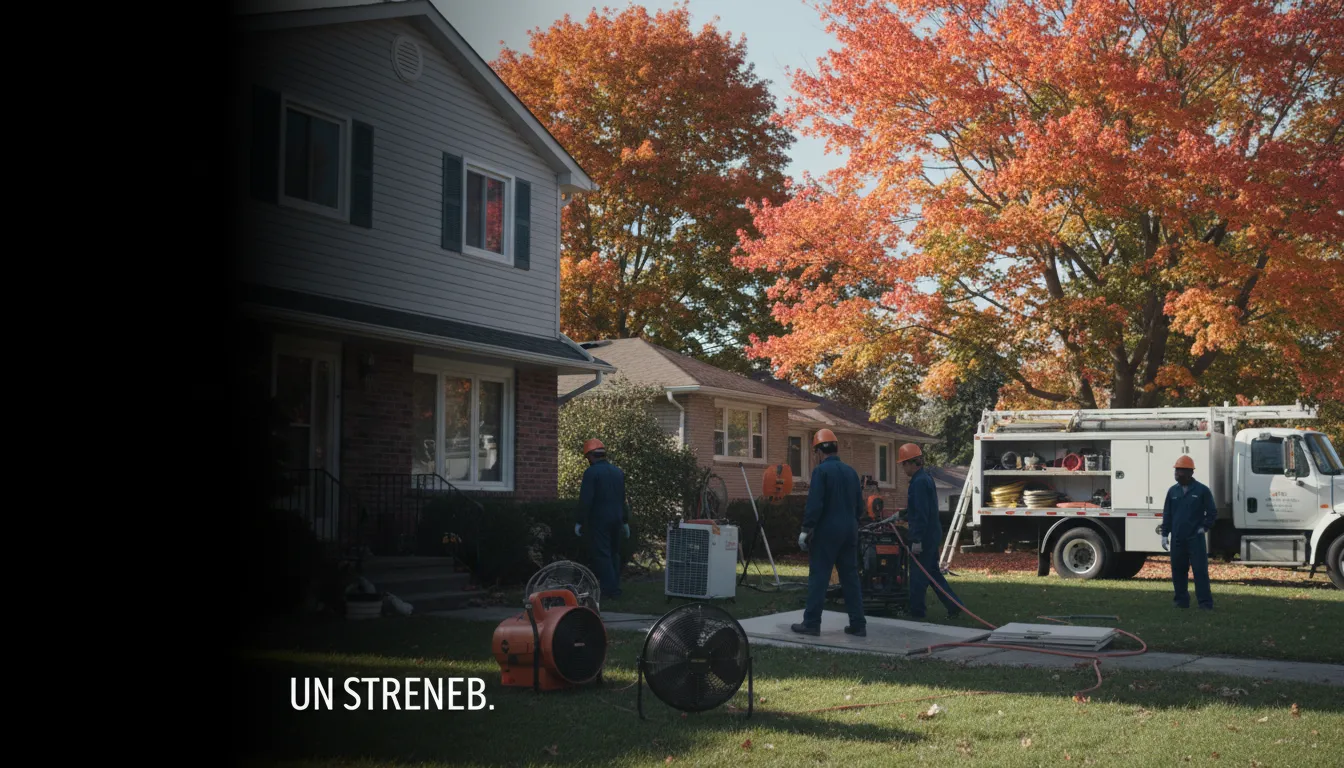
Let's trace the damage and restore it properly
Email us today to schedule a thorough storm damage assessment.
Email Us for a Free EstimateWeather drives water-damage risk — email us if you find water.
Fall water-damage conditions in Markham, ON
Fall rain around Markham, ON tests gutters, sump pumps, and foundations; catching leaks and seepage early prevents the slow water damage and mold that surface over winter.
Proudly Serving Markham, ON
Local, on-time service throughout Markham and the surrounding area.